
What makes S'pore the third most global economy?
Singapore has been ranked as the third most globalized economy among 60 of the world’s largest economies in the recently released Ernst and Young 2011 Globalization Index. Take a quick look at what makes Singapore a global city.
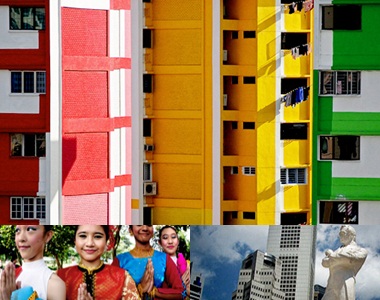
The small island state that has often been described as the little red dot is not so little after all. It is the third most globalized economy among 60 of the world’s largest economies. The recently released Ernst and Young ‘2011 Globalization Index‘ places the country in the third spot after surveying its openness to trade, capital movements, exchange of technology and ideas, labour movements and cultural integration for the period spanning 1995-2015. But before we begin to explore the dynamics of Singapore as a global city, let us look at what characteristics a city or nation needs to posses in order to earn the esteemed and much sought after title “global”.
Very simply put, global cities must impart values and ideas that impact the rest of the world. A global city is one that commands an international presence. It is characterized by business prowess, a cosmopolitan workforce, excellent infrastructure, an enviable living environment, interconnectedness with leading markets, cultural diversity, and knowledge excellence. It is these desirable, yet elusive traits that places a city among the league of eminent global cities; the likes of London, New York and Paris. It is heartening to note that the Oriental cities of Hong Kong (ranked #1 on the index) and Singapore (ranked #3 on the index) have made their way to the top five on the Globalization Index.
与2010年相比,新加坡在2011年的整体排名没有变化。这是一个快速看看新加坡一个全球城市的东西。
Openness to trade
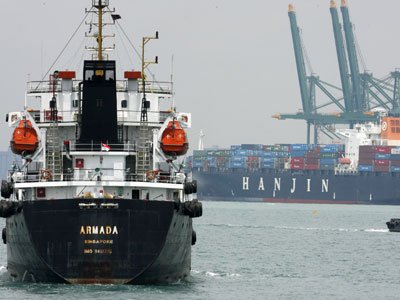
No brownie points for guessing which country aced this parameter. You guessed it right; Singapore got the top score of a perfect 10 for openness to trade. It is the most open for the movement of goods and services and stands out for its cross-border trading. Moreover, the World Economic Forum’s ‘2010 Global Enabling Trade Report’ reaffirms Singapore’s numero uno position as far as openness to trade is concerned. It’s interesting to note that the trade-weighted applied tariff rate amounts to almost zero (0.03%, the second lowest), as 99.9 % of imports enter duty-free in Singapore. Importing and exporting goods requires little paper work (four documents on average), is swift (three to five days on average), and inexpensive. The estimated cost of US$450 per container is less than half the average of high-income economies. With a strategic location and a trade enabling environment Singapore has emerged as one of the world’s most critical trade hubs.
Capital movement
新加坡拥有开放式综合金融市场,用于增加与世界其他地区的资本流动。这是出色的商业环境导致了大型直接投资流入。此外,该国一直吸引了投资者和跨国公司的公平份额在新加坡建立一家公司并投资该地区。新加坡还突出了作为一个精致的金融中心,在那里存在高水平的外币借贷和贷款活动。新加坡居民可以在现货和转发外汇交易中处理,而非居民可以直接和投资组合投资进入该国。锦上添花是新加坡没有外汇管制。预算盈余,外汇量大幅度储备,高储蓄率,适度通胀,声音机构,稳定货币和强大的金融系统等因素有助于加强资本流入国家。该国在资本运动索引中得分6.17点。
劳工运动
新加坡公开的移民政策和专门设计的签bob网赌证方案,如Singapore Employment PassandSingapore EntrePass为希望搬迁到该国的人和企业家开辟了机会,让他们成为家乡。凭借其开放式政策,优秀的生活环境,强劲的经济增长,以及低税收新加坡已成为最受欢迎的全球才能召开的目的地。截至2010年6月,有540,000条公关和130万外国专业人士和工人以及他们在新加坡的家属。
There might have been a recent tightening of immigration policies but by no means has Singapore rolled back the welcome mat for talent professionals. The influx of foreign human capital translates into a deep, diversified, cosmopolitan, highly experienced, and well educated workforce – one that has been consistently rated as the world’s best by BERI’s Labor Force Evaluation Measure. Undeniably, a global workforce is a hallmark of a global city. Singapore’s labor movement score was 4.37 on the Index.
Exchange of technology and ideas
全球城市往往的特点是高度的技术创新,知识创造和研发活动。在这方面,新加坡使得巨大的进步进入了一个以知识的经济发展,以创新和科学为中心的活动。新加坡出现为Insead'2011年全球创新指数'的顶级亚洲创新经济。新加坡政府强烈支持创新企业,致力于2010年的161亿新元,以支持研究,创新和企业,直到2015年。强调吸引和培养专门研发工作和建设技术能力的公司。雀巢,惠普,HCL,拜耳和富士通等公司在过去几年中,在新加坡设立了他们的研发中心和实验室。新加坡的高层技术进步肯定在将其塑造朝向全球化的经济方面发挥了关键作用。
Cultural integration
文化融合是个人从事各种活动的能力,新加坡在制定强大的艺术和文化资源方面取得了成功,提升了宜居商。根据官方数据,每天在新加坡举行92多个艺术和文化活动。近年来,艺术社团,博物馆,艺术表演和遗产中心的数量稳步增加。对艺术和文化活动的政府资助也有相应的增加。总体而言,城市国家的艺术和文化令人欣赏,这一直录制了来自其世界各地居民的文化竞争水平。
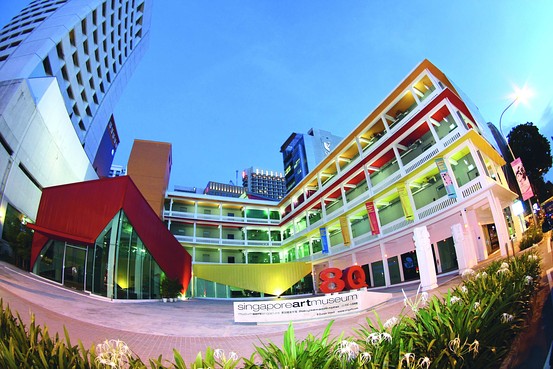
All in all, Singapore is an engine of growth and change – a generator of ideas, and culture. It is a city where thousands flock to live, work and play. A global city has nothing to do with size. It’s all about functionality. It’s about the city’s ability to shape the world. In this sense, Singapore has a strong international image. It is a hub that facilitates investment and social development. Singapore is truly a global city and deserves to be placed among the league of highly globalized economies.